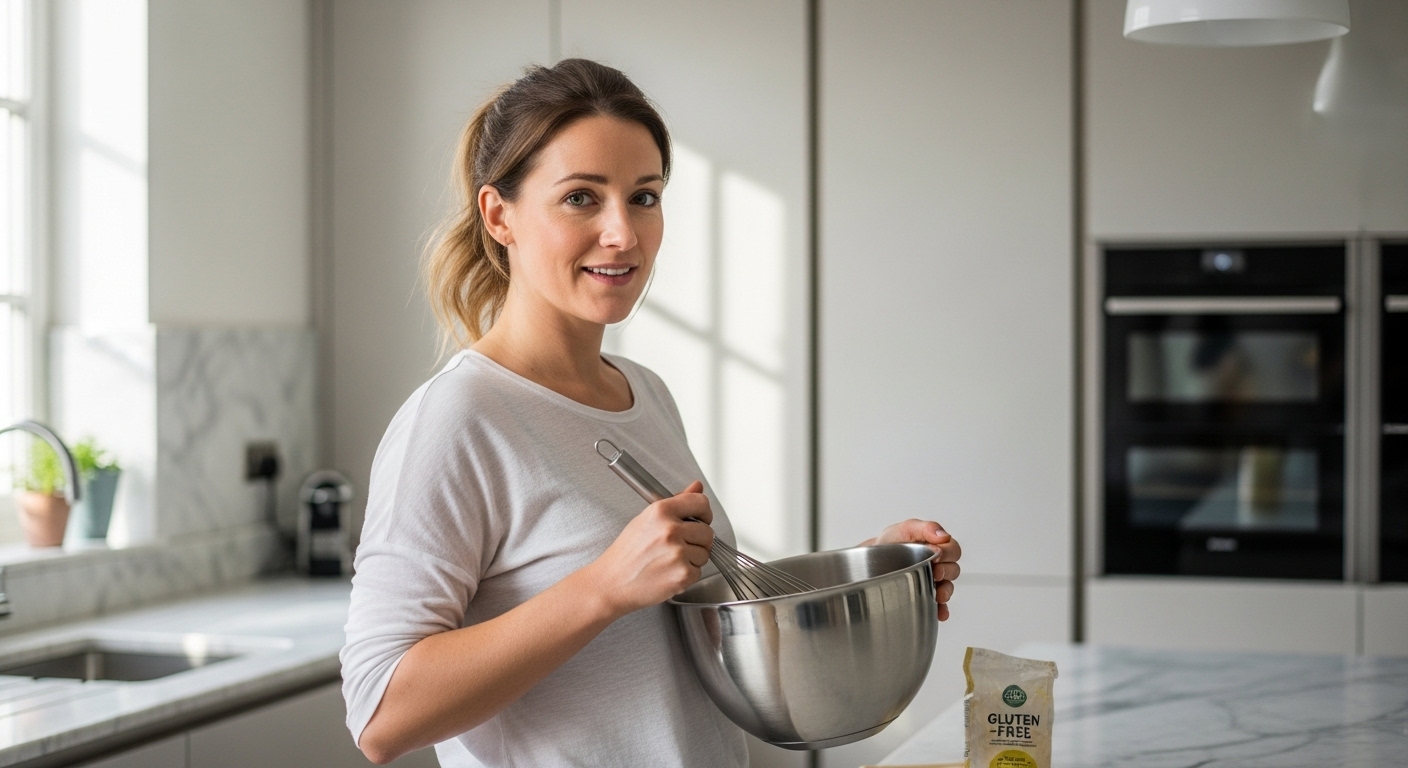
Gluten-free baking is an exercise in precision. Without gluten’s natural elasticity to hold things together, every gram of flour, every degree of temperature, and every second of mixing matters. The right tools don’t just make baking easier — they make it possible. They also safeguard against cross-contamination, a serious concern for coeliac households.
If you’ve ever had a gluten-free loaf collapse, a pastry crumble, or a batter that behaves unpredictably, chances are your tools could use a rethink. With the correct kit, gluten-free baking becomes more consistent, less messy, and far more rewarding.
Gluten-Free Baking Tools Every Home Cook Needs
Gluten contamination can undo even the best-intentioned gluten-free bake. Small amounts — a few crumbs from a chopping board or traces of flour dust — are enough to trigger symptoms in people with coeliac disease.
Every home that bakes gluten-free regularly should have a separate set of utensils. This includes mixing spoons, spatulas, cutting boards, baking trays, and even sieves. Store them on a separate shelf or cupboard to prevent flour drift. Use distinct colours or clear labels to avoid confusion.
If your kitchen uses a shared toaster, invest in toaster bags or, better still, a dedicated gluten-free toaster. The same applies to sandwich presses, waffle makers, and grills — once gluten gets trapped in grooves, it’s nearly impossible to clean completely.
Consistency begins with safety, and cleanliness is the first tool in your baking arsenal.
Digital Scales and Measuring Tools: Precision Over Guesswork
When it comes to gluten-free baking, guesswork doesn’t work. Gluten-free flours vary in density, moisture content, and absorption. A recipe calling for 200 g of flour can behave very differently if you use a cup instead of weighing it properly — much like how a few extra grams can change the texture of freshly made pasta.
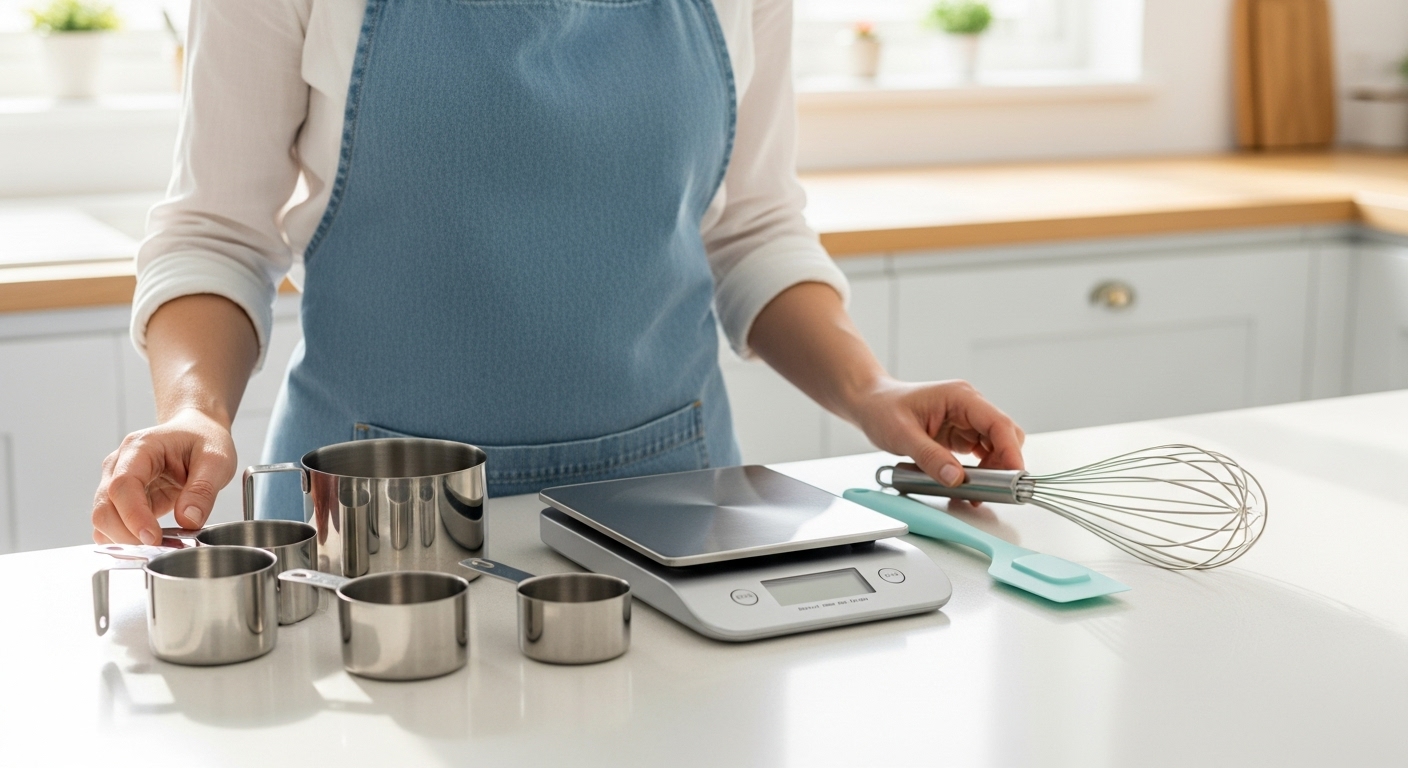
A digital kitchen scale is the single most essential tool in your kit. Measure all dry ingredients by weight rather than volume. Even small errors — five or ten grams — can affect texture or structure.
Invest in a set of measuring spoons for precise measurements of binders such as xanthan gum or psyllium husk. These are powerful ingredients where even a half-teaspoon too much can alter a bake’s entire texture.
Accurate measurement is the difference between a cake that’s light and one that’s brick-heavy.
High-Quality Mixing Bowls and Spatulas
Choose glass or stainless steel mixing bowls that are easy to clean and free from porous surfaces. Avoid wooden spoons or bowls that might retain traces of gluten after washing.
Silicone spatulas are a must — soft enough to scrape bowls clean, sturdy enough to fold batters without deflating them. Keep dedicated spatulas for gluten-free cooking only, ideally colour-coded.
If you bake often, consider nesting bowls in multiple sizes for batching ingredients and keeping dry and wet components separate.
Stand Mixer or Hand Mixer: Consistency Without Overworking
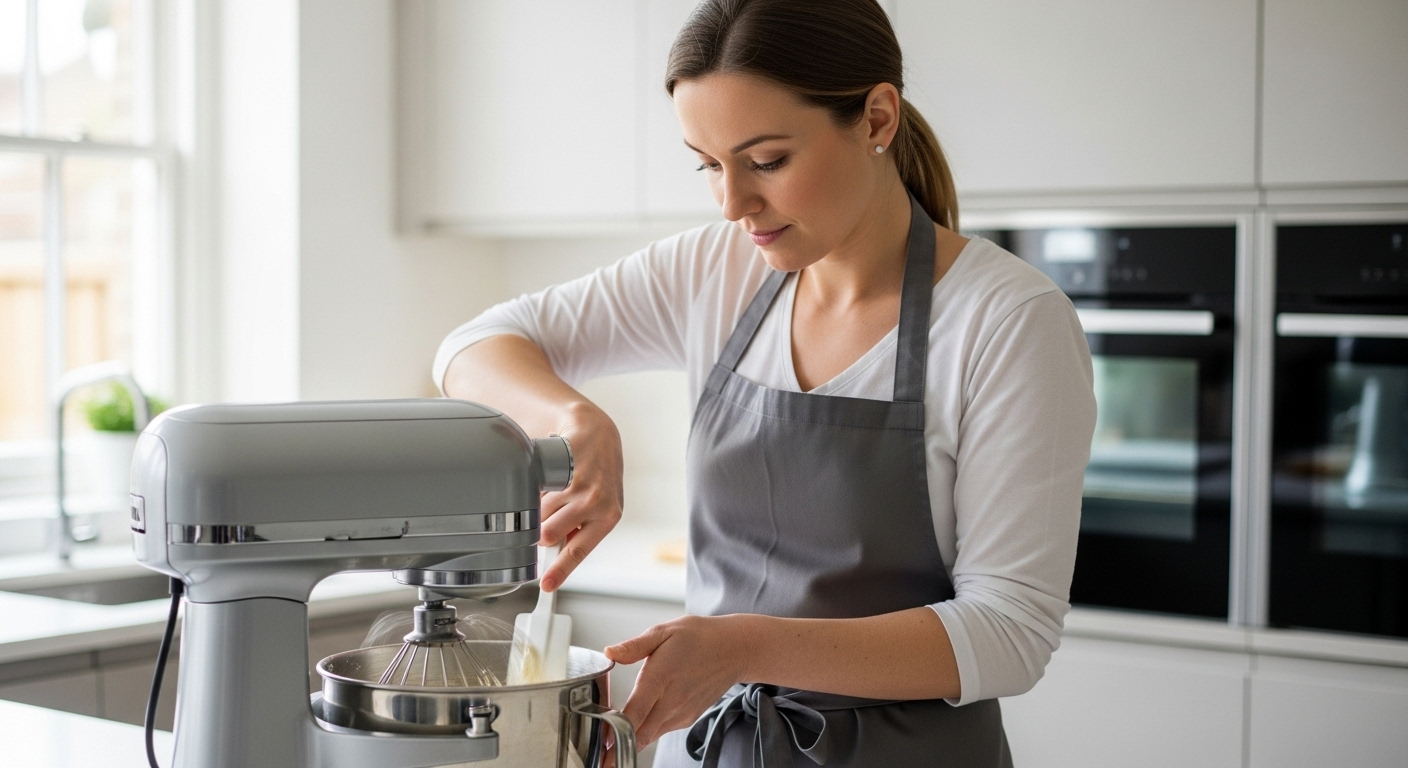
Unlike traditional wheat doughs, gluten-free batters don’t require kneading to develop structure. In fact, overmixing can make them gummy. However, even mixing is still crucial for distributing binders and hydration evenly.
A stand mixer offers hands-free consistency for breads, muffins, and pastries. Look for one with a paddle attachment rather than a dough hook, which is better suited for gluten-based recipes.
For smaller tasks or limited space, a hand mixer does the job well. The key is low-to-medium speed and short mixing times. Gluten-free doughs thrive on control, not brute force.
Fine Mesh Sieve or Flour Sifter
Gluten-free flours often clump due to their starch content. A fine mesh sieve or hand-cranked flour sifter aerates the flour and prevents lumps in your batter.
Sifting also helps mix multiple flours and starches evenly when creating custom blends — rice flour, tapioca starch, sorghum, and potato starch all have different textures, so blending them thoroughly is crucial for even results.
It’s a small tool with a big impact on crumb structure and lift.
Rolling Pins and Baking Sheets
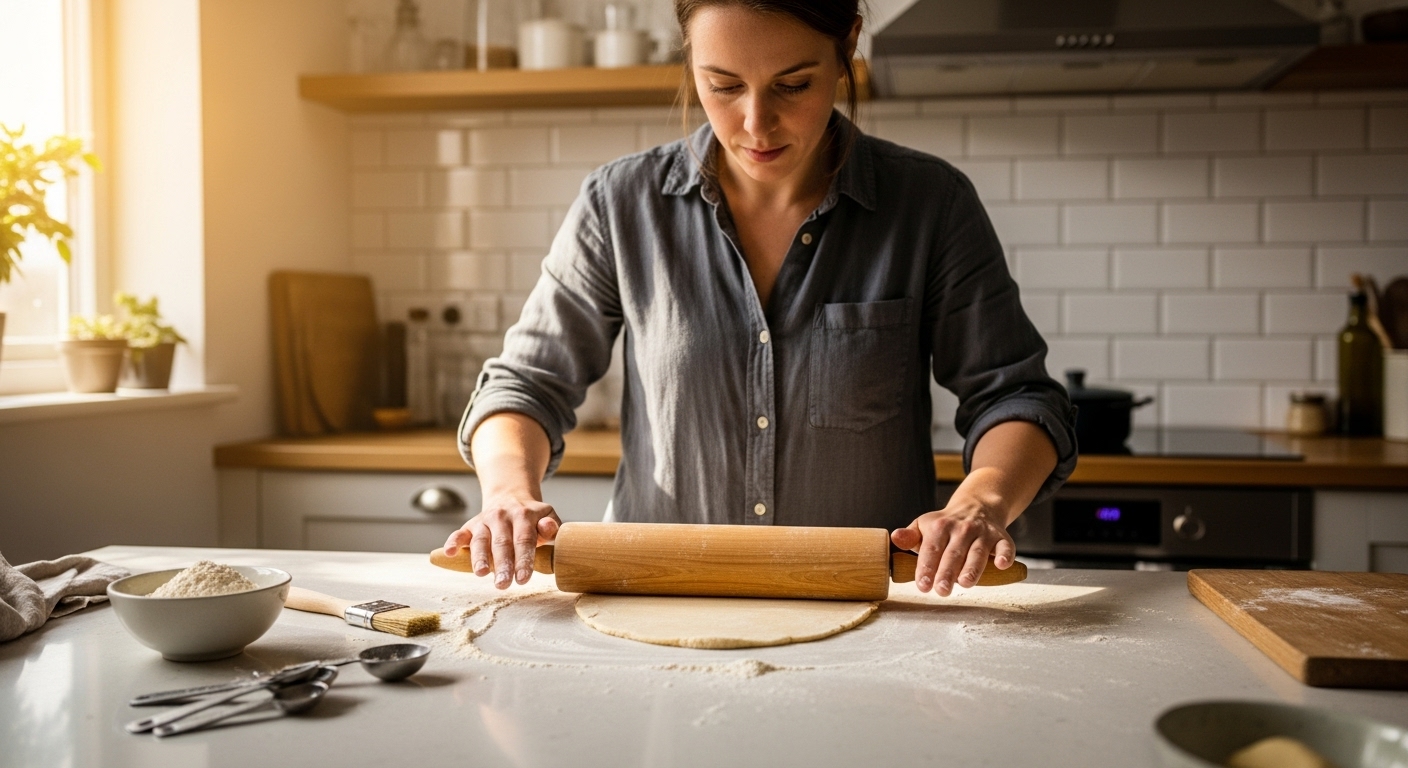
Rolling out gluten-free dough can be tricky. Without gluten, doughs crack more easily and stick to surfaces. A non-stick or silicone-coated rolling pin helps reduce friction.
Always roll dough between two sheets of parchment paper — this prevents sticking and keeps the dough surface smooth. For pastry work, chill both the dough and the rolling pin slightly before use.
Invest in heavy-duty, flat baking sheets that distribute heat evenly. Line them with non-stick baking liners or silicone mats for reusable, mess-free baking.
Thermometers and Ovens That Bake Evenly
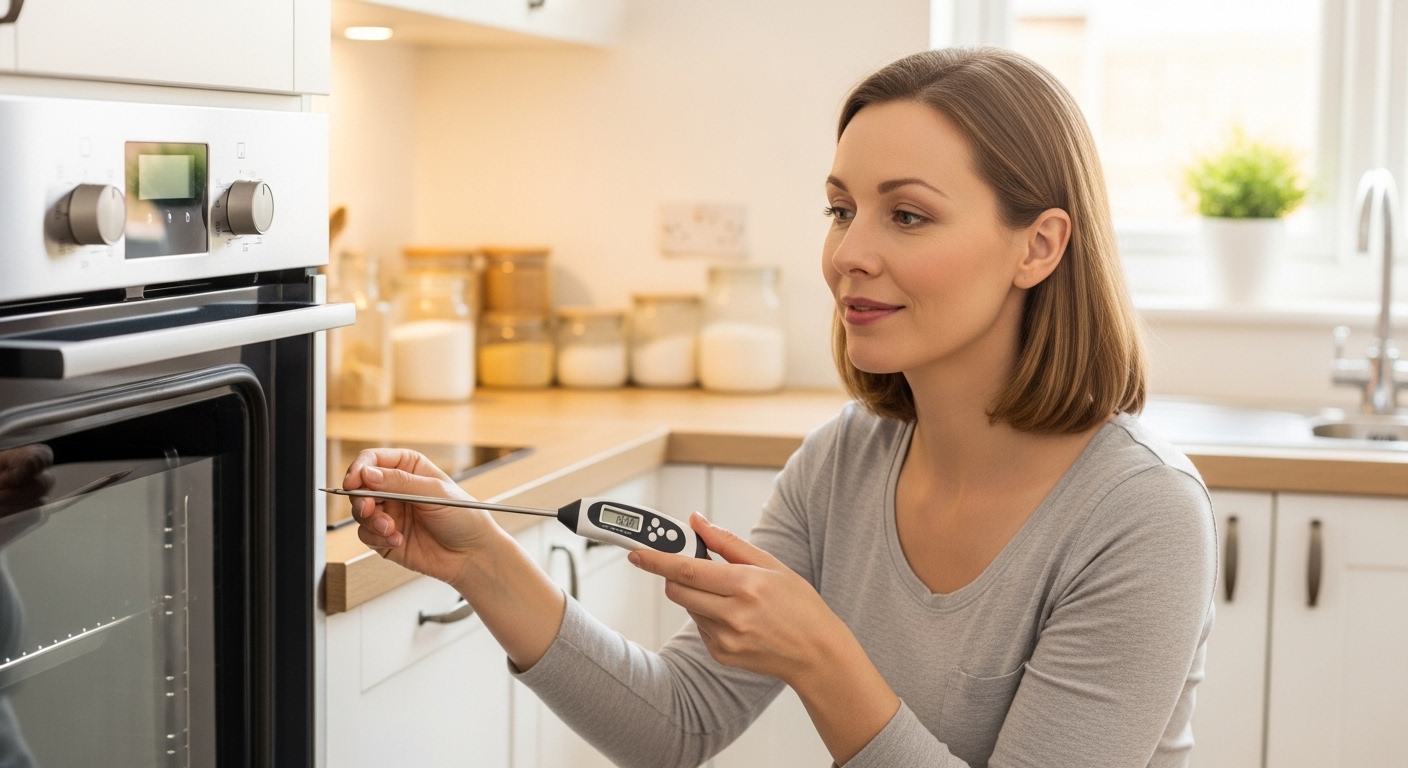
Many home ovens run hotter or cooler than their dials suggest. Gluten-free baking is far less forgiving of temperature fluctuations.
A simple oven thermometer ensures accuracy — most cost under £10 and instantly reveal if your oven runs 10°C too hot.
Consider an instant-read food thermometer for breads and cakes. A gluten-free loaf is fully cooked when it reaches around 95°C internally. Rather than guessing based on colour alone, temperature guarantees a perfect crumb.
Blenders and Food Processors for Homemade Flour Mixes
Gluten-free baking thrives on customisation. A high-speed blender or food processor lets you grind your own flours from oats, brown rice, sorghum, almonds, or chickpeas.
Homemade blends can be fresher, more flavourful, and often cheaper than pre-mixed commercial ones. You can also pulse nuts or seeds into a fine meal for added nutrition and texture in biscuits, muffins, and crusts.
For a smoother finish, always sieve your homemade flour before storing or using it.
Storage Jars and Airtight Containers
Moisture is the enemy of gluten-free flours. Without preservatives, they can clump or spoil more quickly than wheat flour. Store them in airtight glass jars or food-safe plastic containers, clearly labelled and dated.
Keep in a cool, dry cupboard away from sunlight. For long-term freshness, particularly with wholegrain flours like sorghum or buckwheat, store portions in the fridge or freezer.
Dedicated containers also prevent cross-contamination from shared utensils or airborne flour.
Cooling Racks and Non-Stick Liners

Gluten-free baked goods need more structure-setting time. Cooling on a wire rack allows air to circulate, preventing sogginess and helping crusts stay crisp.
Non-stick liners or silicone mats are reusable alternatives to parchment paper and make cleanup easier. They’re particularly handy for delicate items like cookies or meringue-based cakes, which can tear on paper.
Let the bakes cool completely before slicing or handling — gluten-free textures firm up as they rest.
Speciality Tools for Advanced Baking
Once you’re confident, upgrade to tools that take precision even further.
-
A dough scraper helps handle fragile pastry without breaking it.
-
Pastry brushes are essential for egg washes or glazing without introducing crumbs.
-
Silicone mats make excellent work surfaces for rolling, folding, or laminating gluten-free pastry.
-
Bench thermometers and infrared temperature guns are useful for candy, caramel, or butter temperature control.
For serious gluten-free bread bakers, consider a Dutch oven — the contained steam environment mimics bakery conditions, improving crust and lift.
Cleaning and Maintenance Tips
After every baking session, wipe down all surfaces with warm, soapy water. Vacuum or damp-wipe any flour dust that could linger on counters.
Replace scratched silicone tools or old wooden utensils, as small grooves can trap gluten. Keep washing sponges separately for gluten-free prep areas if your kitchen is mixed-use.
It may sound meticulous, but for those with coeliac disease, these small habits prevent accidental exposure and ensure a safe kitchen every day.
Conclusion: Gluten-Free Baking Tools Every Home Cook Needs
Gluten-free baking success relies as much on preparation as it does on ingredients. The right tools — from digital scales and sieves to airtight jars and oven thermometers — remove guesswork and frustration.
Equipped with a clean, precise, and organised workspace, home bakers can achieve results every bit as golden, crisp, and delicious as traditional recipes. With care, attention, and the right gear, gluten-free baking becomes not a challenge, but a craft.
About the Author