
Inside your digestive tract lives an entire microscopic world — a community of bacteria, fungi, and other microorganisms known collectively as the gut microbiome. This hidden ecosystem plays an extraordinary role in health. It helps digest food, extract nutrients, regulate inflammation, and even influence mood and immunity.
When you remove gluten from your diet — whether for coeliac disease, non-coeliac gluten sensitivity, or personal preference — you inevitably change what your microbiome feeds on. Some people experience rapid digestive improvement, while others find that gut balance takes time to settle.
The shift is complex. Gluten-free eating alters the availability of certain fibres and carbohydrates that bacteria rely on. As a result, the microbial population may temporarily lose diversity before adjusting to a new dietary landscape.
This article explores how a gluten-free diet impacts the microbiome, what research has uncovered about these changes, and how you can support a healthy, balanced gut in the long term.
Understanding the Gut Microbiome and Its Role in Health

The human gut is home to trillions of microorganisms, collectively weighing around two kilograms — roughly the same as your brain. These microbes are not random passengers; they perform vital work that keeps you alive and well.
A healthy microbiome breaks down complex carbohydrates, produces vitamins such as K and B12, and generates short-chain fatty acids (SCFAs) that nourish the intestinal lining. It trains your immune system to tell friend from foe and plays a major role in keeping inflammation under control.
Diversity is key. The more varied your microbial community, the more resilient it tends to be. Diet is the single most powerful factor influencing that diversity. Stress, lack of sleep, and certain medications — particularly antibiotics — can also disrupt the balance.
In essence, your microbiome reflects what you eat, how you live, and even how you think. Change the diet, and the ecosystem inevitably responds.
How Gluten Interacts with the Gut
Gluten is a group of proteins found in wheat, barley, and rye. It gives dough its elasticity and bread its satisfying chew, but for some people, it poses significant problems.
In those with coeliac disease, gluten triggers an autoimmune reaction that damages the small intestine’s lining. This leads to inflammation, nutrient malabsorption, and a host of symptoms ranging from fatigue to anaemia. For these individuals, strict lifelong gluten avoidance is non-negotiable.
Even among people without coeliac disease, gluten can sometimes cause digestive discomfort. Wheat contains fermentable carbohydrates known as FODMAPs, which are poorly absorbed and can cause bloating and gas in sensitive individuals.
When the gut lining is inflamed or irritated, it affects not only digestion but also the microbes that inhabit it. A compromised intestinal barrier — sometimes called “leaky gut” — can alter microbial composition, allowing unfriendly bacteria to thrive while reducing beneficial ones.
Thus, gluten sensitivity and microbiome imbalance often go hand in hand. When removing gluten, both the gut lining and microbial community must adapt to a new environment.
What Happens to the Microbiome on a Gluten-Free Diet

The first weeks or months of a gluten-free diet bring noticeable shifts within the microbiome. Researchers have repeatedly observed a decline in certain beneficial bacterial groups — particularly Bifidobacterium and Lactobacillus. These are the species known for supporting digestion, producing SCFAs, and preventing the growth of harmful microbes.
Why do they decline? The answer lies not in the absence of gluten itself, but in the reduced intake of whole grains that typically accompanies gluten removal. Wheat, barley, and rye are rich in prebiotic fibres that feed these bacteria. When they are suddenly removed, the microbes lose one of their main fuel sources.
Studies have found that microbial diversity may decrease temporarily as a result. However, this doesn’t necessarily spell trouble. The microbiome is highly adaptive — once the diet stabilises with other fibre-rich foods, diversity tends to recover.
People who maintain a balanced gluten-free diet, rich in alternative grains, fruits, vegetables, and legumes, often see their microbiota rebalance within a few months. The key determinant is fibre intake, not gluten avoidance alone.
Fibre: The Missing Link in Gluten-Free Microbiome Health
Fibre is the unsung hero of gut health. It’s not digested by your body — instead, it becomes nourishment for your microbes. As they ferment dietary fibre, they produce short-chain fatty acids like butyrate, which strengthen the gut lining, lower inflammation, and support immune function.
Many gluten-free diets, especially at the start, rely heavily on rice, maize, or processed starches. These foods are safe but often low in fibre. Without enough fermentable substrate, beneficial bacteria decline, and opportunistic species may take over.
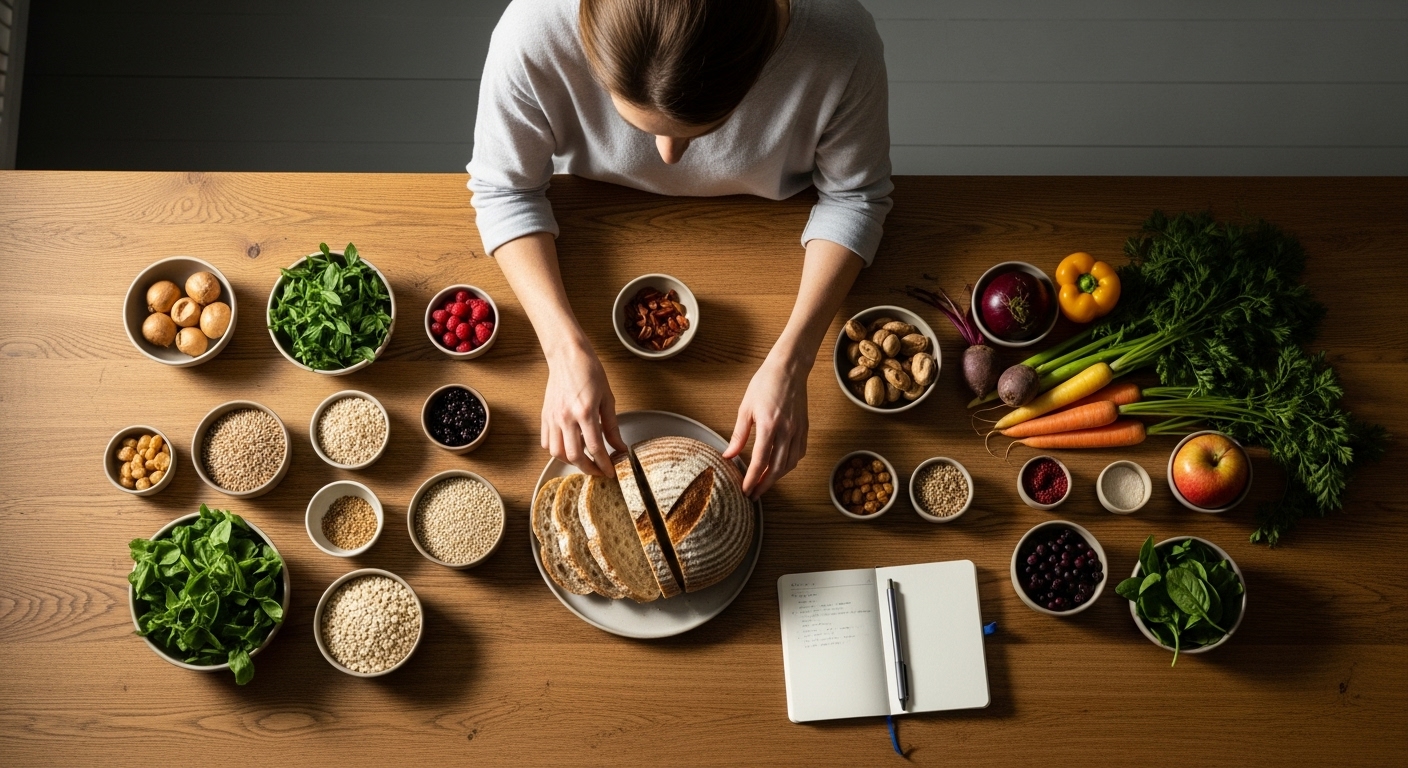
To maintain microbial health, fibre variety is essential. Excellent gluten-free sources include:
-
Quinoa and buckwheat, both rich in resistant starch.
-
Gluten-free oats, which provide beta-glucans that feed Bifidobacteria.
-
Legumes such as lentils, chickpeas, and beans (as tolerated).
-
Seeds and nuts, offering fibre plus prebiotic compounds like inulin.
-
A colourful range of fruit and vegetables, supplying polyphenols that microbes love.
Adults should aim for 25–30 grams of fibre daily — achievable through three main meals rich in plants. Gradually increasing fibre intake helps prevent bloating as the microbiome adapts.
A well-fed microbiome is a happy one. For those transitioning to gluten-free living, fibre is the bridge between restriction and resilience.
Fermented Foods and Probiotics: Rebuilding the Microbial Community

When dietary change disrupts the microbiome, fermented foods can help restore balance. They contain live cultures that boost beneficial bacteria and help regulate gut acidity.
Yoghurt and kefir supply Lactobacillus and Bifidobacterium species that colonise the intestine and improve digestion. Fermented vegetables such as sauerkraut and kimchi add microbial variety along with antioxidants. Kombucha and miso can contribute too, though they should be introduced gradually to gauge tolerance.
Probiotic supplements are another option, particularly in the early months of gluten-free adjustment. Look for strains with clinical evidence of benefit, such as Bifidobacterium lactis and Lactobacillus rhamnosus. These are known to support intestinal barrier integrity and reduce bloating or irregularity.
However, probiotics work best when paired with prebiotics — the foods that nourish them. Garlic, onions, leeks, bananas, and asparagus are excellent prebiotic sources that encourage good bacteria to thrive.
Think of it as gardening: probiotics plant the seeds, prebiotics feed the soil.
Nutrient Balance and the Microbiome
Going gluten-free often involves more than just removing bread and pasta — it changes the whole nutritional landscape. Many gluten-containing foods are fortified with key nutrients such as B vitamins, iron, and zinc. Without careful replacement, deficiencies can develop, and these nutrients are vital for both the gut lining and its microbial inhabitants.
Iron helps regulate oxygen availability within the gut; B vitamins are essential for bacterial metabolism; zinc supports immune function and mucosal repair. A deficiency in any of these can indirectly alter microbial balance.
To maintain harmony, include:
-
Fortified gluten-free breads or cereals.
-
A wide variety of fruits and vegetables to cover micronutrient bases.
-
Protein sources like eggs, fish, meat, pulses, and seeds.
-
A daily portion of fermented dairy or plant-based equivalent.
Balanced nutrition doesn’t just fuel the body — it sustains the ecosystem within.
Lifestyle Factors That Influence Microbial Recovery
The microbiome thrives on more than food alone. Lifestyle habits have measurable effects on bacterial diversity and stability.
Movement promotes gut motility and circulation, encouraging bacterial turnover and diversity. Even gentle exercise, such as walking or yoga, has been linked with improved microbial composition.
Sleep plays an equally critical role. Disrupted sleep patterns alter gut-brain signalling and have been shown to reduce the abundance of beneficial bacteria. Aim for consistent, high-quality rest.
Stress, often overlooked, directly affects the gut through hormonal pathways. Chronic stress increases intestinal permeability and can suppress SCFA production. Mindfulness, breathing exercises, or simply spending time outdoors can help regulate the gut-brain axis.
Finally, limiting alcohol and ultra-processed foods helps protect microbial balance. Excess sugar and emulsifiers in processed products can feed less desirable bacteria and deplete diversity.
A gluten-free diet anchored in whole foods, movement, rest, and calm forms the best foundation for microbial recovery.
Research Overview: What Science Says About Gluten-Free Microbiomes
Scientific understanding of the gluten-free microbiome has advanced rapidly in recent years.
European studies have shown that within just four weeks of starting a gluten-free diet, participants experienced a measurable shift in gut bacteria. Levels of Bifidobacterium and Lactobacillus dropped initially, while Enterobacteriaceae — a family that includes some opportunistic species — tended to rise.
However, these changes were not necessarily harmful. Researchers found that when participants increased their intake of naturally gluten-free whole grains like quinoa and millet, bacterial diversity improved again. The results suggest that the composition of the gluten-free diet — rather than gluten absence alone — determines microbial outcomes.
UK-based nutrition research has reached similar conclusions. In one study, people following a balanced gluten-free diet rich in fibre and polyphenols had microbiomes almost indistinguishable from those of gluten eaters. Meanwhile, individuals relying on highly processed gluten-free alternatives had lower microbial richness and reported more digestive symptoms.
Another emerging theme is individual variability. Each person’s microbiome responds differently, shaped by genetics, prior diet, and overall health. What matters most is long-term dietary quality.
The consensus is clear: it’s not gluten that makes or breaks the microbiome — it’s the nutrients and fibres that come with or without it.
Conclusion: How a Gluten-Free Diet Impacts the Microbiome
Going gluten-free can transform gut health — but the outcome depends on how the diet is managed. Removing gluten alters the microbiome, often reducing certain beneficial bacteria at first. Yet with mindful nutrition, balance can be restored and even strengthened.
The key lies in diversity: a range of plant foods, adequate fibre, fermented products, and mindful living habits. Together, these support microbial richness, healthy digestion, and immune resilience.
In short, a gluten-free lifestyle isn’t inherently good or bad for your gut — it’s an opportunity. Done well, it can help rebuild and nurture a thriving microbiome that keeps you energised, balanced, and well from the inside out.
About the Author